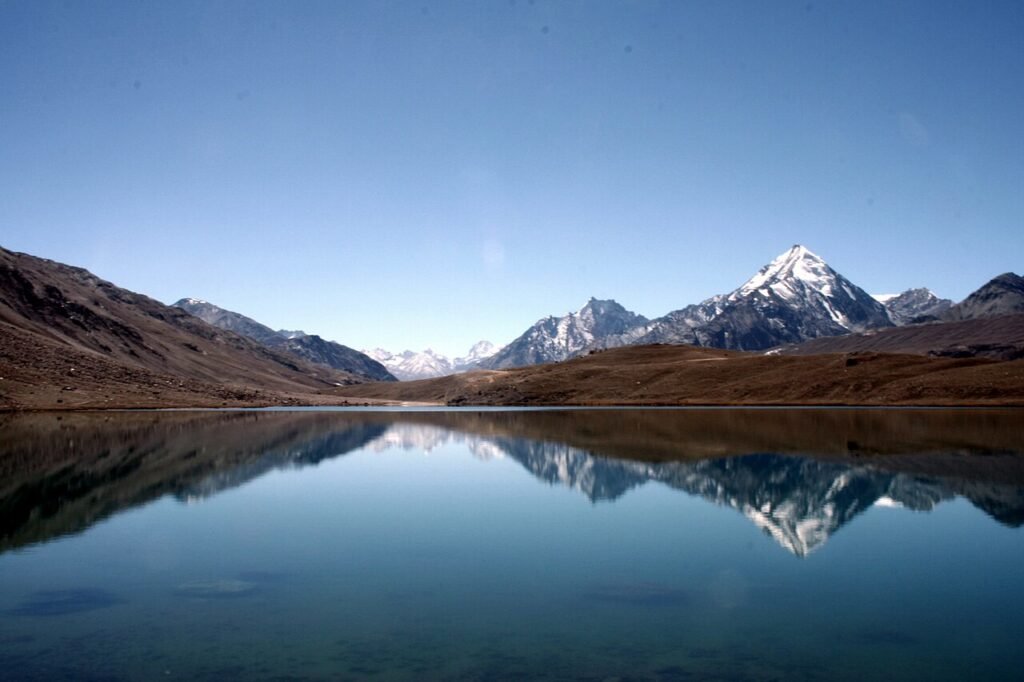
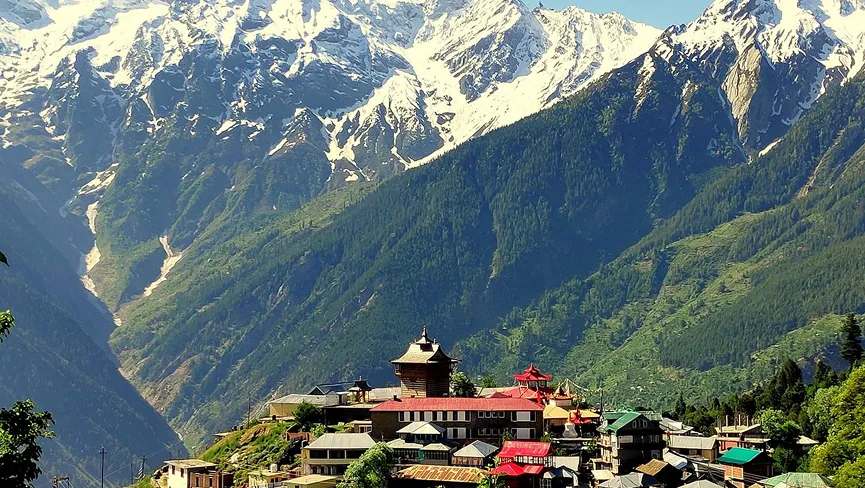
Kaza is the largest town and an important administrative and commercial centre of Spiti Valley in Himachal Pradesh. Located at an elevation of approximately 3,800 metres (12,470 feet) above sea level, Kaza is surrounded by the high mountains and dry, rugged landscapes characteristic of Spiti.
The town serves as a practical base for exploring some of the most famous places in Spiti, including Key Monastery, Kibber, Chicham, Langza, Hikkim, Komic, Dhankar and Pin Valley.
Kaza itself is not only a transit point. It has local markets, monasteries, cafés, homestays, restaurants, and services that make it the main hub for travelers exploring the valley.
Best time to visit Kaza: generally June to October, when road access is more reliable and most tourism services are operational. Conditions can change quickly, so check current road and weather conditions before travelling.
Summer
Summer is the main travel season for Kaza. Roads are generally more accessible, and most tourist services are operating.
Monsoon
Spiti lies in the rain-shadow region of the Himalayas, so it receives considerably less monsoon rainfall than many other parts of Himachal Pradesh.
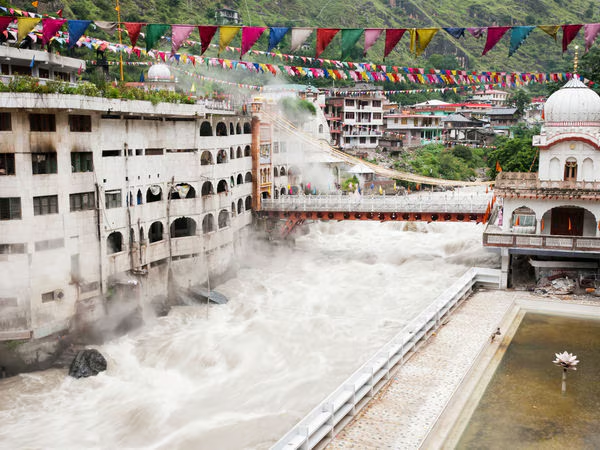
However, the roads approaching Spiti can still be affected by rainfall, landslides, and road damage, particularly on the Kinnaur side.
Autumn
September and October can offer cold but clear conditions and excellent visibility. Temperatures fall quickly after sunset.
Winter
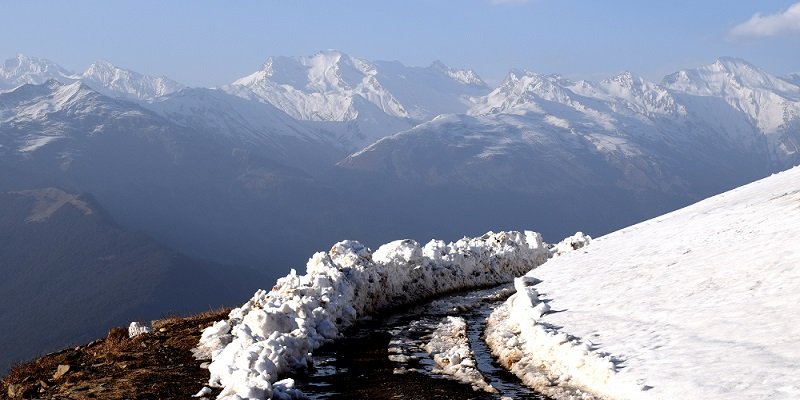
Kaza experiences very cold winters and heavy snowfall can isolate parts of Spiti. Many tourism services operate at reduced capacity, and road connectivity can be severely affected.
Winter travel should only be attempted after checking current road and weather conditions.
Top Places to Visit Near Kaza
Key Monastery
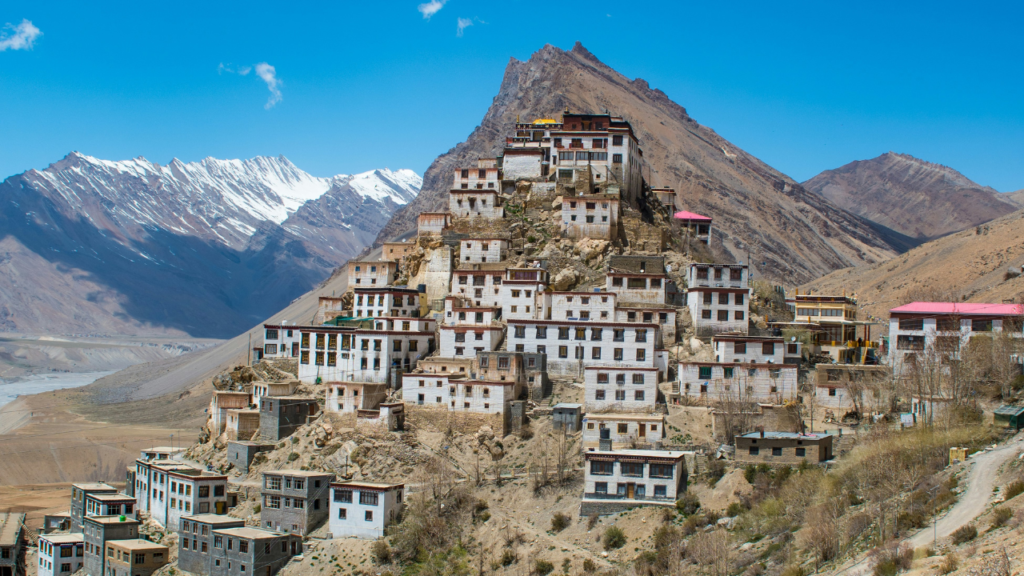
Key Monastery, also written as Ki or Kee Monastery, is one of the most important Buddhist monasteries in Spiti Valley.
Located on a hill above the Spiti River, it is one of the most recognizable landmarks in the region.
The monastery belongs to the Gelug school of Tibetan Buddhism and remains an active religious institution.
Kibber Village
Kibber is a high-altitude village in Spiti Valley known for its traditional houses, dramatic mountain surroundings, and proximity to the Kibber Wildlife Sanctuary.
It is one of the most well-known villages to visit from Kaza.
Chicham Bridge
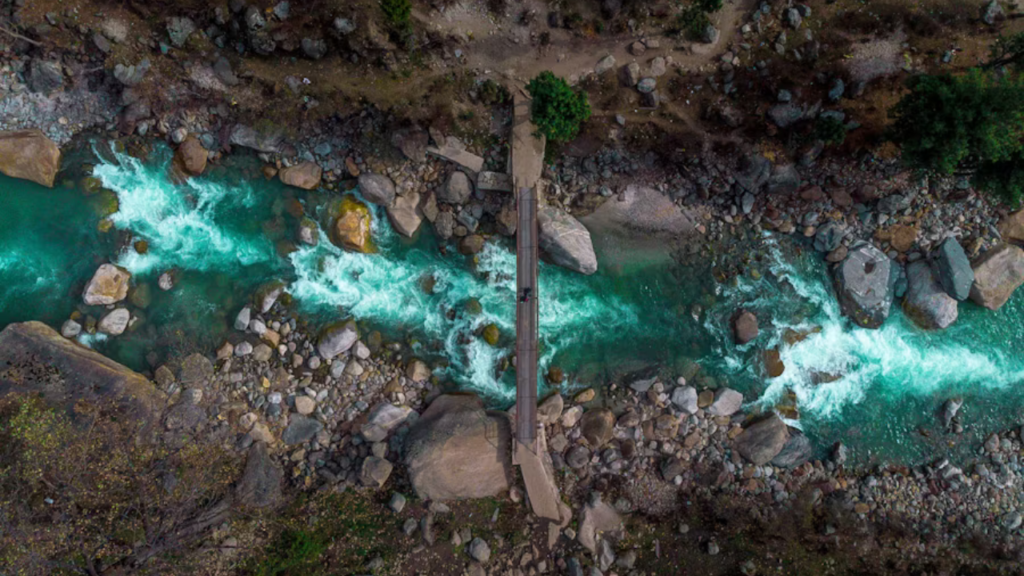
The Chicham Bridge connects the village of Chicham with Kibber and crosses a deep gorge.
It is widely known for its dramatic mountain setting and is one of the popular stops on a Kaza–Kibber excursion.
Langza
Langza is a high-altitude village known for its wide mountain views, traditional houses, Buddhist culture, and the large Buddha statue overlooking the settlement.
The area is also known for marine fossils.
Hikkim
Hikkim is a high-altitude village near Komic. It is widely known for its post office, which has become a popular stop for travelers.
Komic
Komic is one of the highest inhabited villages in the Spiti region and is known for its high-altitude location, Buddhist monastery, and dramatic landscape.
Dhankar
Dhankar is a historic settlement known for Dhankar Monastery and Dhankar Lake.
The village is dramatically positioned above the Spiti River and provides some of the most distinctive scenery in the valley.
Pin Valley
Pin Valley is known for its distinctive landscape, Buddhist villages, and the Pin Valley National Park.
The valley provides a contrasting landscape to the main Spiti Valley and can be explored from the Kaza area.
Altitude of Kaza
Kaza is situated at an elevation of approximately 3,650 metres (11,980 feet) above sea level.
This elevation is important for travelers because the body needs time to adjust to reduced oxygen availability.
Visitors arriving from much lower elevations should avoid immediately planning strenuous activities. Allow time to rest and acclimatize, especially during the first day or two.
Things to Do in Kaza
1. Explore Kaza Market
Kaza’s main market is the commercial centre of the area. Travelers can find restaurants, cafés, local shops, travel services, and basic supplies.
2. Visit Monasteries
The region around Kaza has several important Buddhist monasteries, including Key and Dhankar.
3. Explore High-Altitude Villages
Visiting villages such as Langza, Hikkim, Komic, Kibber and Chicham is one of the highlights of a Kaza trip.
4. Experience Local Culture
Stay at a homestay, interact respectfully with local residents, and learn about the traditional lifestyle of Spiti.
5. Photography
The stark mountains, traditional villages, monasteries, river valleys, and changing light make Kaza an excellent destination for landscape photography.
6. Stargazing
Spiti’s high altitude, dry climate, and relatively low light pollution can provide excellent conditions for observing the night sky when the weather is clear.
How to Reach Kaza ?
Kaza is a remote Himalayan destination, and road travel is the primary way to reach it.
There are two major road approaches:
Via Manali
The Manali–Kaza route crosses high mountain terrain, including Rohtang Pass and Kunzum Pass.
This route offers spectacular scenery but is seasonal. Road access depends on snow clearance, weather, road conditions, and government decisions.
The route also passes through areas such as Atal Tunnel, Gramphoo, Batal and Kunzum Pass before entering Spiti Valley.
Via Shimla
The longer route from the Shimla side generally passes through Narkanda, Rampur, Reckong Peo, Kinnaur and Tabobefore reaching Kaza.
This route is often used as the more reliable approach when the Manali–Kaza route is closed by snow, although road conditions can still cause delays.
By Bus
Himachal Pradesh Road Transport Corporation and other local services operate buses on routes connecting Kaza with parts of Himachal Pradesh. Services are seasonal and schedules can change.
For remote routes, confirm the latest bus schedule locally rather than relying on old online information.
Culture and Traditions of Kaza
Kaza is part of the culturally distinct Spiti Valley, where Tibetan Buddhist traditions have strongly influenced local life.
Monasteries, village temples, prayer flags, prayer wheels, traditional homes, and local festivals are important parts of the region’s cultural landscape.
Agriculture and animal husbandry remain important in the valley, with crops such as barley, peas, and other hardy crops suited to the high-altitude environment.
The traditional architecture of Spiti uses local stone, mud, and timber, adapted to the valley’s cold and dry climate.
Kaza Weather & Temperature
Typical temperatures vary considerably between daytime and nighttime, and conditions can change quickly at Kaza’s high elevation.
Season
Temperature
Winter
-20°C to 5°C
Spring
-5°C to 15°C
Summer
5°C to 25°C
Monsoon
10°C to 25°C
Autumn
-2°C to 20°C
Offbeat Places Near Kaza
Gette Village
A small high-altitude settlement near the Kibber region offering expansive mountain views.
Tashigang
A remote village in the high-altitude landscape around Kibber and Chicham.
Demul
A high-altitude village known for its traditional setting and relatively quiet atmosphere.
Comic/Komic Surroundings
The landscape around Komic offers open high-altitude terrain and views across the Spiti mountains.
These villages have limited infrastructure compared with Kaza, so travelers should plan accordingly.
Popular Day Trips from Kaza
Kaza → Key Monastery → Kibber → Chicham
One of the most popular sightseeing circuits from Kaza.
Kaza → Langza → Hikkim → Komic
A classic high-altitude village circuit.
Kaza → Dhankar
A road journey toward Dhankar combining dramatic valley scenery with cultural and historical attractions.
Kaza → Pin Valley
A longer excursion into the Pin Valley, subject to road conditions.
How Many Days Are Enough for Kaza?
For Kaza and the main nearby attractions, 3–4 days can provide a reasonable starting point.
A longer stay is preferable if you want to explore Pin Valley, Dhankar, remote villages, or multiple high-altitude destinations without rushing.
Travelers should also keep buffer time because mountain roads can be affected by weather and unexpected closures.
Altitude Sickness in Kaza
Because of its high elevation, some travelers may experience symptoms of acute mountain sickness (AMS).
Possible symptoms include:
Headache
Dizziness
Nausea
Fatigue
Difficulty sleeping
Shortness of breath during exertion
Do not ignore worsening symptoms. If symptoms become severe, seek medical assistance and descend to a lower elevation when advised.
Avoid alcohol and unnecessary strenuous activity immediately after arriving at high altitude, and stay adequately hydrated.
Travel Tips for Kaza
Give yourself time to acclimatize.
Avoid strenuous activities immediately after arriving.
Carry warm layers even during summer.
Keep sunglasses and sun protection because high-altitude sunlight can be intense.
Carry basic medicines and personal essentials.
Keep some cash because digital payment connectivity can be unreliable in remote areas.
Do not depend entirely on mobile connectivity.
Carry power banks for longer excursions.
Check road conditions before leaving Kaza.
Keep buffer days in your itinerary.
Respect monasteries and local religious practices.
Avoid littering.
Do not remove fossils or other natural objects from protected areas.
Use experienced local drivers for difficult mountain routes.
Kaza is known as the main town and administrative centre of Spiti Valley, and it is a base for visiting Key Monastery, Kibber, Chicham, Langza, Hikkim, Komic, Dhankar and Pin Valley.
2. Where is Kaza located?
Kaza is located in Spiti Valley, Lahaul and Spiti district, Himachal Pradesh, along the Spiti River.
3. What is the altitude of Kaza?
Kaza is approximately 3,800 metres (12,470 feet) above sea level.
4. Is Kaza safe for tourists?
Kaza is a popular destination for travelers, but its high altitude and remote location require preparation. Weather and road conditions can change quickly, so travelers should plan accordingly.
5. What is the best time to visit Kaza?
The main travel season is during the warmer months when road connectivity is available. The exact best period depends on your route and current road conditions.
6. Can I visit Kaza in winter?
Winter travel is possible in some circumstances, but conditions are extremely cold and road connectivity can be severely affected by snow. It requires careful planning and current local information.
7. How many days are enough for Kaza?
3–5 days is a useful range for exploring Kaza and several nearby attractions without rushing.
8. What should I carry for a Kaza trip?
Carry warm layers, good walking shoes, sun protection, personal medicines, identification documents, a power bank, and basic essentials. For remote excursions, carry water and necessary supplies.

 Shimla, Narkanda, Kalpa, Chitkul, Nako, Tabo, Kaza, Chandratal, Manali
 8 Night 9 Days