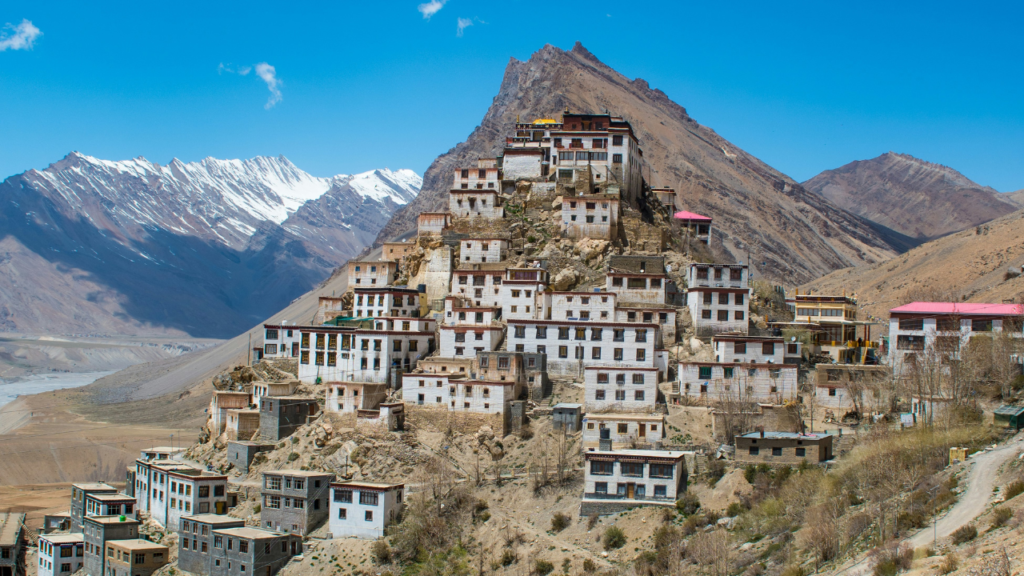
Key Monastery (also spelled Ki Monastery or Kye Monastery) is the largest and oldest Tibetan Buddhist monastery in Spiti Valley, Himachal Pradesh. Perched dramatically on a hilltop at an altitude of approximately 4,166 metres (13,668 feet) above sea level, the monastery overlooks the Spiti River and the town of Kaza. With its whitewashed buildings stacked one above another, Key Monastery is one of the most iconic landmarks in the Himalayas.
Belonging to the Gelugpa (Yellow Hat) school of Tibetan Buddhism, the monastery is home to around 250–300 monksand serves as an important centre for Buddhist learning, meditation, and religious ceremonies. Its ancient murals, rare manuscripts, prayer halls, and breathtaking location make it one of the most visited attractions in Spiti Valley.
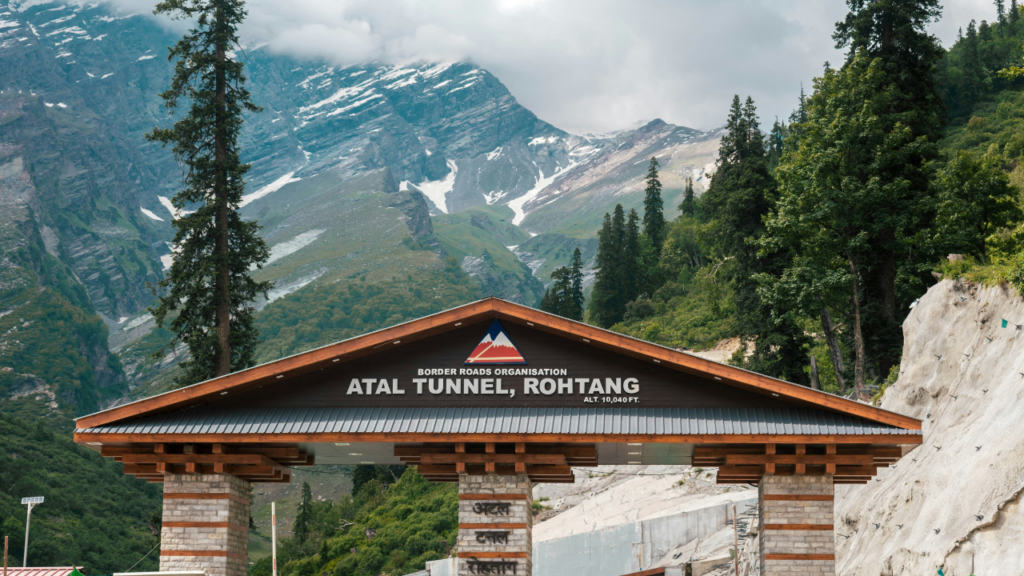
Distance from Manali: Approximately 200 km(via Atal Tunnel and Kunzum Pass during the summer season)
Distance from Shimla: Approximately 430 km
Nearest Town: Kaza
Nearest Airport: Kullu–Manali Airport (Bhuntar)
Nearest Railway Station: Shimla Railway Station
Best Time to Visit Key Monastery
The best time to visit Key Monastery is from May to October, when the roads to Spiti Valley are generally open and the weather is pleasant for sightseeing. During these months, visitors can enjoy clear skies, spectacular mountain views, and explore the monastery comfortably.
Winter (November to April) brings heavy snowfall and freezing temperatures. Although the monastery remains open throughout the year, reaching it can be difficult due to snow-covered roads and changing weather conditions.
The monastery’s prayer hall is decorated with beautiful murals, ancient Buddhist paintings, statues, and traditional prayer wheels.
Ancient Library
Key Monastery preserves a valuable collection of ancient Buddhist scriptures, rare manuscripts, and historical texts that reflect centuries of Buddhist learning.
Rooftop Viewpoint
The monastery offers panoramic views of the Spiti River, Kaza, and the surrounding snow-capped Himalayan mountains.
Meditation Rooms
Visitors can observe the peaceful environment where monks study, meditate, and carry out their daily spiritual practices.
Traditional Architecture
The monastery’s fortress-like structure, narrow pathways, whitewashed walls, and multi-level design make it one of the finest examples of traditional Tibetan architecture in India.
Things to Do at Key Monastery
A visit to Key Monastery offers a unique opportunity to experience the spiritual and cultural heritage of Spiti Valley. Explore the ancient prayer halls, admire centuries-old murals and Buddhist artwork, spin the traditional prayer wheels, and enjoy breathtaking views of the Spiti Valley from the monastery grounds. Visitors can interact respectfully with the resident monks, learn about Tibetan Buddhism, and experience the peaceful atmosphere that makes the monastery one of the most important spiritual sites in the Himalayas. Photography is allowed in many outdoor areas, but visitors should always follow the monastery’s guidelines inside prayer halls.
Route to Reach Key Monastery
Key Monastery is easily accessible by road from Kaza, the main town of Spiti Valley.
Via Kaza
Kaza → Rangrik → Key Monastery
The monastery is about 15 km from Kaza and can be reached in approximately 30 minutes by car or taxi.
This route usually remains open longer than the Manali route and is commonly used during the early and late tourist seasons.
Important Note
Due to the high altitude, visitors should spend some time acclimatizing in Kaza before visiting the monastery.
Local Culture
Key Monastery is home to monks of the Gelugpa school of Tibetan Buddhism, and the surrounding villages are inhabited by the warm and welcoming people of Spiti Valley. Visitors can witness traditional Buddhist customs, colourful prayer flags, ancient festivals, and a way of life that has remained largely unchanged for centuries.
Weather at Key Monastery
Spring
-2°C to 12°C
Summer
5°C to 20°C
Monsoon
5°C to 18°C ( little rainfall)
Autumn
-2°C to 15°C
Winter
-20°C to -5°C
Where to Find Snow in Key Monastery ?
Snow can be seen on the surrounding Himalayan peaks throughout much of the year. During winter, the monastery and nearby villages are often covered in snow, creating a spectacular landscape. Travelers visiting between December and March are likely to experience snowfall, although road closures are common.
Nearby Places to Visit
Kaza
The main town of Spiti Valley, offering cafés, hotels, local markets, and serving as the base for exploring the region.
Kibber Village
One of the highest permanently inhabited villages in the world, known for its traditional houses, wildlife, and spectacular mountain views.
Chicham Bridge
Asia’s highest suspension bridge, connecting Kibber and Chicham villages while offering incredible views of the deep gorge below.
Langza Village
Famous for its giant Buddha statue, ancient marine fossils, and panoramic views of the surrounding mountains.
Hikkim
Home to the world’s highest post office, where visitors can send postcards from one of the highest inhabited villages on Earth.
Komic Village
One of the world’s highest motorable villages, known for its ancient Tangyud Monastery and peaceful Himalayan setting.
Essential Travel Tips for Key Monastery
Spend a day in Kaza before visiting to acclimatize to the high altitude.
Carry warm clothing throughout the year.
Respect the monastery’s customs and maintain silence inside prayer halls.
Ask for permission before photographing monks or indoor religious spaces.
Carry sufficient cash, as digital payment options may be limited.
Stay hydrated and avoid strenuous activity if you are not acclimatized.
Keep the monastery clean and avoid littering.
Visit during the morning for fewer crowds and better lighting for photography.
Check road conditions before traveling, especially outside the summer season.
Follow all instructions provided by the monastery staff.
Key Monastery is located near Kaza in the Lahaul and Spiti district of Himachal Pradesh.
2. What is Key Monastery famous for?
It is famous for being the largest monastery in Spiti Valley, its ancient Buddhist heritage, stunning hilltop location, and panoramic Himalayan views.
3. What is the altitude of Key Monastery?
Key Monastery is situated at approximately 4,166 metres (13,668 feet) above sea level.
4. What is the best time to visit Key Monastery?
The best time to visit is from May to October.
5. Can tourists visit Key Monastery?
Yes. The monastery welcomes visitors, who are expected to dress modestly and respect its religious traditions.
6. How far is Key Monastery from Kaza?
It is located approximately 15 km from Kaza.
7. What are the nearby attractions?
Popular nearby attractions include Kaza, Kibber, Chicham Bridge, Langza, Hikkim, and Komic.
8. Is Key Monastery worth visiting?
Absolutely. Key Monastery is one of the most iconic landmarks in Spiti Valley, offering a unique blend of spirituality, history, traditional Tibetan architecture, and breathtaking Himalayan scenery.

 Shimla, Narkanda, Kalpa, Chitkul, Nako, Tabo, Kaza, Chandratal, Manali
 8 Night 9 Days